
Imagine a homeowner in Cambridge asking Google:
“Which local bathroom renovator could complete my project for around $35,000, and what will affect the final price?”
Or a business owner asking:
“Which Waikato solar installer can estimate the potential savings from my power bill?”
The customer may no longer open ten websites and call three businesses. AI-powered search can help people research, compare and shortlist their options before they contact anyone.
The question for New Zealand trade and service businesses is simple:
Does your website provide enough useful information to be understood and recommended?
In a Nutshell
AI-powered search makes clear, useful website information increasingly important. Your website should explain:
- Where you work
- Which services and jobs you provide
- Which customers or projects are a good fit
- What affects the likely price
- What proof supports your claims
- What the customer should do next
This is not only about AI. These are the same answers real customers already need before they feel ready to enquire.
How Is AI Changing Online Search?
Google has introduced more AI capabilities into Search, including features that can understand complex questions, research options and help users take action. Google has also published guidance for website owners about appearing in AI-powered search experiences.
Traditional Google search usually gives someone a list of links. AI-powered search can gather information from several sources and present a more direct answer.
For a trade or service business, this could mean a potential customer has already compared several providers before landing on your website.
Read Google’s announcement about AI Search
Why Are Many Trade Websites Difficult to Recommend?
Many local business websites rely on broad statements such as:
- Quality workmanship
- Competitive prices
- Friendly service
- Contact us for a free quote
These statements may be true, but they do not help a customer determine whether the business is right for their specific job.
- A builder may provide renovations, new homes and commercial construction, but prefer renovation projects above a certain value.
- An electrician may work across residential, commercial and rural properties, but have different enquiry processes for each.
- A solar installer may need the customer’s power usage, roof details and location before providing a meaningful recommendation.
If none of this information is available online, the customer must call to find out. Many will leave instead.
The Five-Minute Trade Website Test
Open your website and pretend you know nothing about the business. Can you find clear answers to these six questions?
1. Where does the business work?
Name the towns, cities or regions you genuinely service.
2. Which jobs are a good fit?
Explain the type, size or scope of work you want to receive.
3. What affects the price?
You do not need to provide a fixed quote. Explain the main variables or offer an indicative range.
4. What proof is available?
Show relevant projects, customer stories, qualifications, reviews or before-and-after examples.
5. What information will the customer need?
Tell people whether you require measurements, photographs, a power bill, plans, budget or timeframe.
6. What should the customer do next?
Offer a useful action that goes beyond a general contact form.
If two or more answers are unclear, that is where your website improvement should begin.
A Contact Form Is Not a Complete Customer Journey
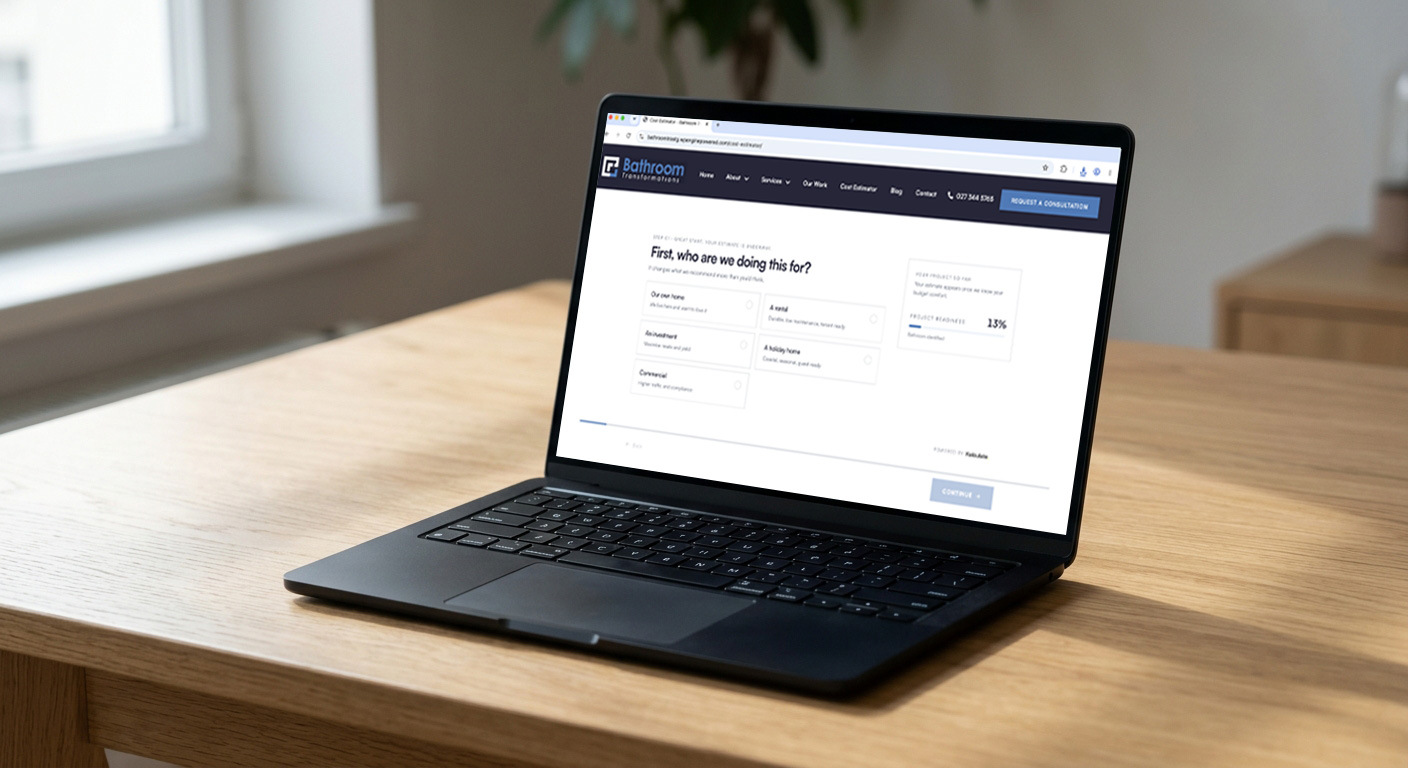
A standard contact form normally collects a name, email address, phone number and message. That gives the business contact details, but very little decision-making information.
A guided website tool could also collect:
- Location
- Project type
- Budget
- Timeframe
- Measurements
- Photographs
- Current situation
- Desired outcome
It could then provide an indicative estimate, suitability result or recommended next step.
The customer receives clarity. The business receives a better-informed opportunity.
What Could This Look Like for Your Business?
- A renovation company could provide an indicative project range based on room size, layout and finish level.
- A solar business could estimate potential savings using the customer’s electricity usage.
- A landscaping company could qualify the site, budget, timeframe and type of work.
- An accountant or adviser could assess the customer’s needs and recommend the appropriate service.
The tool does not need to replace professional judgement. It should prepare both sides for a better first conversation.
Start With One Repeated Question
You do not need to rebuild your entire website. Begin with the question your team answers repeatedly:
- “How much might this cost?”
- “Is my job suitable?”
- “Which option is right for me?”
- “What information do you need?”
- “What happens next?”
That question may reveal the most useful tool your website does not have yet.
Email Kalculate with your website address and the question your customers ask most often. We will tell you the first estimator, qualifier, assessment or guided journey we would consider.
Free 2-minute business pipeline check
See how your website could bring you more customers.
Answer a few quick questions to see how you could grow your pipeline, and what we could build for your business, from a cost calculator to a quiz that helps customers choose.
Show me what could work for my business
Free personalised results. No call needed.